Can a European-Style Schedule Revive Houston’s Soccer Fandom?

(image via gobearkats.com)
With Major League Soccer now confirming the league is shifting to a European-style calendar — running from late summer to May — it got me thinking: what would that look like here in Houston, and how would it affect the Dynamo’s fan base?
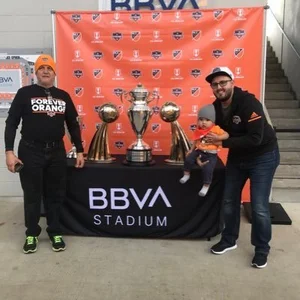
Each year, fans and media alike revisit the same question: What will it take to fill the stadium again? What will it take to recreate the electric atmosphere that once shook Robertson Stadium or the early days of what was then BBVA Compass Stadium? Back then, you could feel the energy — even in 100-degree weather on a blazing August afternoon. I was there, sweating and cheering among thousands of fans who made Houston soccer feel alive.
But somewhere along the way, that passion faded. And the question of why is complicated — a perfect storm of circumstances that chipped away at the fandom piece by piece.
The Slow Fade of a Once-Fiery Fanbase
In the club’s first six seasons, the Dynamo reached four MLS Cups and won two. Fans were spoiled early, and expectations soared. But as the years went by, the playoff droughts piled up, ownership and roster investment lagged, and the momentum that once made Houston a powerhouse slowly dissolved.
It wasn’t just about the losses — though those didn’t help. Sitting in humid, 95-degree heat to watch a struggling team isn’t anyone’s idea of fun. The club also fell behind in marketing, lacked personal connection with fans, and didn’t invest in the kind of star power that other MLS cities flaunted. Name your reason — or your poison — and you can probably find a piece of the puzzle there.
It was never just one thing. It was everything.
Would a New Schedule Fix Anything?
That’s where the talk of switching to a European calendar becomes interesting. Imagine a fall-to-spring MLS season: cooler weather, scarves that finally make sense, and fans cheering without the Texas sun beating down on them. In theory, Houston would have no more excuses.
But would that alone fill the stadium? Probably not.
Because now, instead of battling the summer heat, the Dynamo would be battling fall football — high school on Fridays, college on Saturdays, the Texans on Sundays. Not to mention the Astros, who’ve built a decade-long dynasty just down the street. Minute Maid Park offers air conditioning and playoff baseball while Shell Energy Stadium offers mesh seats and Big Ass Fans (yes, that’s the brand name). It’s a tough sell.
Renovations, Rebranding, and Reconnection
The club has made strides. Shell Energy Stadium continues to evolve, with more renovations aimed at improving the fan experience — not just for the Dynamo and Dash, but also for Texas Southern University football, the Houston Gamblers, and other events that make it a year-round destination in East Downtown.
But to truly bring fans back, Houston Dynamo FC must do more than just update facilities. It has to rebuild relationships.
The upcoming 2026 World Cup, with Houston hosting matches, could be a turning point. The world’s biggest party is coming to town, and it will ignite local soccer fever — but only if HDFC is ready to capitalize on it. And frankly, they’re behind the curve in marketability.
There’s no reason a metropolitan area of nearly eight million people, in one of the most soccer-loving regions in the U.S., can’t consistently fill a 22,000-seat stadium. But that takes connection, storytelling, and visibility.
Building the Culture Again
Houston Dynamo and Dash players need to be seen and known — not just on the field, but in the community. Organize player appearances at youth soccer clinics, host meet-and-greets at local markets, send Dash players to sign autographs at Dynamo games and vice versa. Let fans fall in love with the people behind the jerseys again.
And yes, signing a player like Héctor Herrera was a huge step — a proven star, a national icon. But the club’s marketing never fully took advantage of his presence. His image should’ve been everywhere in Houston. After year three, another marquee signing should’ve followed to maintain momentum and excitement. Instead, it feels like another rebuild is starting from scratch.
What It’ll Take
General Manager Pat Onstad has spoken about the challenges of MLS’ offseason — trying to recruit players while European leagues are midseason. A shift to the European calendar would, in theory, make transfers smoother. Other MLS clubs have figured it out, so the Dynamo can too. Especially with owner Ted Segal publicly stating his willingness to invest.
But what kind of investment matters most? Splashing money on stars? Promoting homegrown Houston talent? Developing and selling young prospects? The truth is, it’s not one or the other. It’s all of the above.
Houston is a soccer city — that’s undeniable. Yet somehow, over two decades, its professional club has too often slipped into the background. Reigniting that flame will take commitment from everyone: ownership, players, staff, media, and fans alike.
The potential is there. The passion still exists. It just needs a spark to light it again.